
Website, SEO, Reviews, and Automation: What Should Come First?
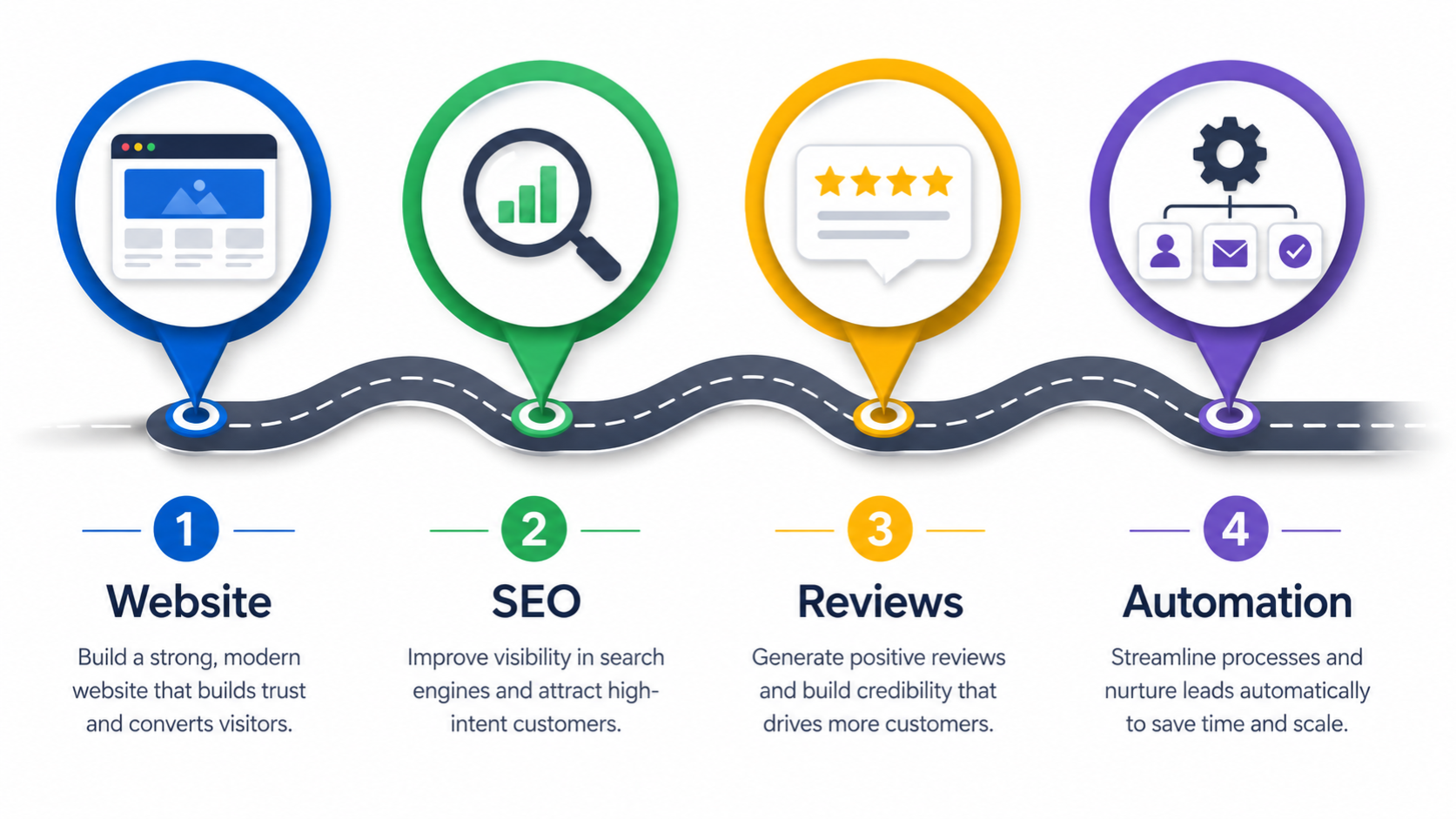
Website → SEO → Reviews → Automation

Many business owners know they need a better digital presence, but they are not sure where to start.
- Should they redesign the website?
- Invest in SEO?
- Ask for more reviews?
- Start email marketing?
- Run ads?
- Set up automation?
- Post more on social media?
The answer depends on the business, but in most cases, there is a practical order that works best.
Step 1: Start with the website
Your website is the foundation.
Before spending money on ads, SEO, or automation, make sure your website clearly explains what you do and makes it easy for people to contact you.
A good website should answer five basic questions:
- Who are you?
- What services do you offer?
- Who do you help?
- Why should someone trust you?
- What should they do next?
If visitors land on your website and feel confused, everything else becomes harder. SEO may bring traffic, but traffic will not help much if the website does not convert. Ads may generate clicks, but clicks become expensive when the landing page is weak.
Start by making your website clear, professional, and action-oriented.
Step 2: Build SEO and AI visibility
Once the website foundation is in place, focus on visibility.
SEO helps search engines understand your business. AI-ready content helps modern discovery tools understand your services, expertise, and relevance.
This includes:
- Service pages
- Local keywords
- Helpful blog content
- Frequently asked questions
- Clear page titles and descriptions
- Internal links
- Consistent business information
- Structured, easy-to-read content
SEO is not just about ranking for one keyword. It is about building a digital footprint that helps customers discover you when they are looking for answers.
Step 3: Strengthen trust with reviews and listings
Visibility brings people to your business. Trust helps them choose you.
That is where reviews, listings, and reputation signals matter.
If your Google Business Profile is incomplete, your listings are inconsistent, or your reviews are weak, customers may hesitate. Even if your website looks good, people often look for outside validation before they contact you.
Focus on:
- Accurate listings
- Consistent name, address, and phone information
- Review requests
- Review responses
- Updated business profiles
- Clear service descriptions
These small trust signals can make a big difference.
Step 4: Add automation
Automation works best after your foundation is clear.
If your website, messaging, and contact process are not ready, automation may simply move confusion faster. But when the foundation is strong, automation can help you follow up with leads, send reminders, request reviews, nurture prospects, and stay consistent.
Useful automation can include:
- Lead follow-up emails
- Contact form notifications
- Review requests
- Appointment reminders
- Newsletter sequences
- Customer re-engagement messages
- CRM tracking
The goal is not to automate everything. The goal is to automate the right things so your business can respond faster and stay organized.
The best order
For many businesses, the right sequence is:
Website first. Visibility second. Trust third. Automation fourth.
That does not mean each step must be perfect before moving forward. But it does mean your investment should follow a logical path.
How Digital Paragon helps
Digital Paragon helps businesses build this foundation in a practical way. We look at your website, content, SEO, listings, reviews, automation, and lead flow together, not as disconnected services.
Because real digital growth comes from connected systems.
Final thought
Do not try to fix everything at once. Start with the foundation. Build visibility. Strengthen trust. Then automate what helps the business grow.
That is how digital activity becomes business progress.